- Free shipping for all orders
- UPS 2-day on orders above $99.99
- UPS next day on orders above $199.99
In peptide and compound research, analytical testing is the foundation of data reliability. Before a compound is used in any laboratory setting, researchers must confirm two critical factors:
The two most widely used tools for this verification are:
Understanding how these work—and how to evaluate them—is essential for selecting high-quality research materials.
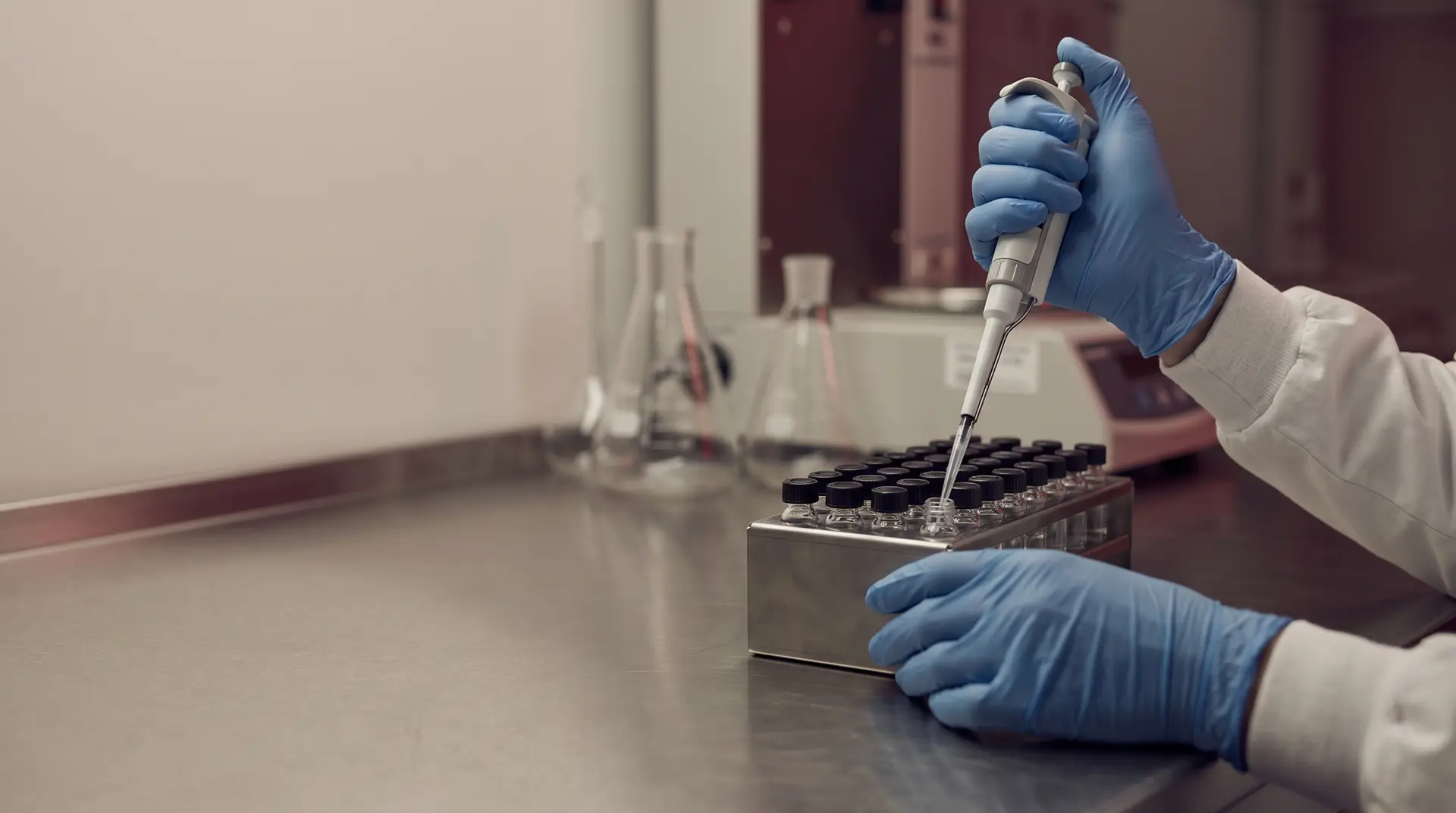
What Is HPLC Testing? High-Performance Liquid Chromatography (HPLC) is an analytical method used to separate, detect, and quantify components within a sample. In peptide research, HPLC is primarily used to: Measure purity percentage Detect impurities or degradation products Confirm batch consistency How HPLC Works A sample is passed through a column under high pressure. As […]
High-Performance Liquid Chromatography (HPLC) is an analytical method used to separate, detect, and quantify components within a sample.
In peptide research, HPLC is primarily used to:
A sample is passed through a column under high pressure. As it moves through:
The system detects each component as it exits the column, generating a chromatogram.
An HPLC test produces a chromatogram, which visually represents the composition of a sample.


If the main peak accounts for 98% of total peak area, the sample is considered ~98% pure.
A Certificate of Analysis (COA) is a document that reports the results of analytical testing for a specific batch of a compound.
It serves as verification that the material meets defined research specifications and provides transparency into testing standards.
A high-quality COA typically contains:
Often supported by:
It’s a common mistake to focus only on purity.
A sample can be:
Techniques like mass spectrometry confirm that:
Both purity and identity must be verified to ensure valid research outcomes.
While requirements vary by study, common benchmarks include:
The appropriate level depends on the sensitivity and goals of the research model.
Using improperly tested or low-quality compounds can lead to:
Verified testing ensures that observed outcomes are due to the intended compound—not unknown variables.
In multi-compound or stacked research models, testing becomes even more critical.
Each compound must be independently verified because:
Reliable testing helps maintain clarity when studying complex biological interactions.
(→ Internal link: Multi-Compound Research Design Explained)
Passing HPLC testing is not the final step.
Compounds can degrade due to:
Maintaining proper storage conditions ensures that the compound retains its verified purity over time.
(→ Internal links: Storage & Stability, Peptide Storage Best Practices)
For Research Use Only (RUO) materials, testing documentation plays a key role in:
COAs provide a record that supports responsible and compliant research use.
(→ Internal link: RUO Standards)
When assessing research compounds, look for:
A lack of transparency is often a red flag.
HPLC testing and Certificates of Analysis (COAs) are essential for verifying the purity, identity, and reliability of research peptides and compounds.
Understanding how to interpret this data allows researchers to:
Strong testing standards are not just a quality measure—they are a critical component of credible scientific research.
Discount Applied Successfully!
Your savings have been added to the cart.

Just Compounds provides research peptides and specialty compounds exclusively for qualified researchers and laboratory use. Please confirm the following before continuing.
By proceeding, you confirm that the statements above are accurate. Products offered by Just Compounds are intended strictly for laboratory research and are not approved for human or veterinary use.