In scientific research, compliance and proper classification of materials are essential for maintaining safety, consistency, and regulatory alignment. One of the most important classifications used in laboratory settings is Research Use Only (RUO).
RUO designation defines how a compound can be used, handled, and distributed within research environments. Understanding this classification helps ensure that compounds are used appropriately within controlled laboratory standards.
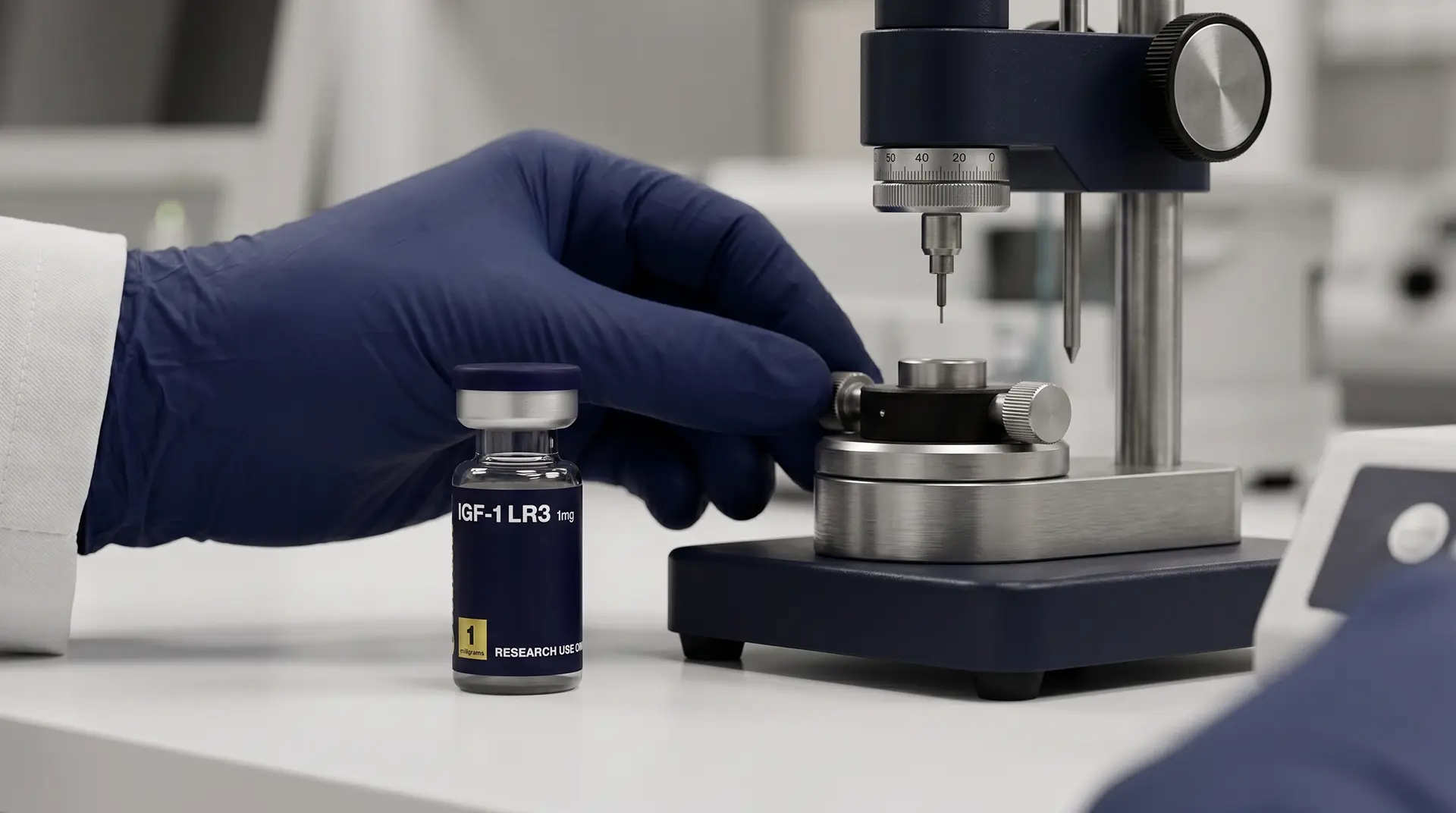
What Does RUO (Research Use Only) Mean? Research Use Only (RUO) refers to materials that are intended strictly for laboratory research purposes. RUO compounds are: Not approved for human or veterinary use Not intended for diagnostic or therapeutic applications Designed exclusively for controlled scientific research This classification is standard across chemical, biological, and molecular research […]
Research Use Only (RUO) refers to materials that are intended strictly for laboratory research purposes.
RUO compounds are:
This classification is standard across chemical, biological, and molecular research industries.
RUO standards exist to ensure that compounds are used:
RUO materials are restricted to laboratory settings where conditions can be properly managed.
They are intended for studying biological, chemical, or physiological mechanisms—not for consumption or clinical use.
RUO designation ensures that researchers follow appropriate institutional and safety protocols.
RUO-labeled compounds typically have the following characteristics:
Understanding how RUO differs from other classifications is important in laboratory environments.
| Classification | Purpose | Use Case |
| RUO (Research Use Only) | Scientific research | Lab-based studies only |
| IVT (In Vitro Diagnostic) | Diagnostic testing | Clinical laboratory diagnostics |
| FDA-Approved | Medical treatment | Human or veterinary use |
RUO materials are strictly the most research-focused category.
Compliance ensures that research is conducted safely, ethically, and consistently.
Verification tools like HPLC testing and Certificates of Analysis (COAs) are critical for RUO compliance.
They help confirm:
(→ Internal link: HPLC Testing & COAs)
Proper documentation supports RUO compliance by ensuring traceability and accountability.
Common documentation includes:
Clear documentation helps maintain scientific integrity and reproducibility.
RUO materials must be handled under controlled laboratory conditions.
Key requirements include:
(→ Internal link: Peptide Storage & Stability)
In multi-compound research models, RUO compliance becomes even more important.
Each compound must:
Interactions between compounds require careful documentation and control.
(→ Internal link: Multi-Compound Research)
While RUO materials are not intended for clinical use, laboratory safety remains essential.
Researchers should:
Safety procedures help maintain a controlled and reliable research environment.
Incorrect. RUO does not indicate safety or risk level—it defines intended use only.
Incorrect. Classification is based on regulatory designation, not purity alone.
Incorrect. RUO is a defined regulatory category used across scientific industries.
RUO classification supports:
Without clear standards, research outcomes become difficult to validate or replicate.
RUO (Research Use Only) classification is a foundational standard in laboratory science. It ensures that compounds are used strictly for controlled research purposes and handled according to established scientific protocols.
By adhering to RUO guidelines, researchers maintain compliance, improve data reliability, and support the integrity of scientific investigation.
Precision matters in research. Just Compounds is committed to delivering analytically verified compounds with consistency, transparency, and reliability.
All products available through Just Compounds are intended strictly for laboratory research purposes. These compounds are not approved for human consumption, veterinary use, therapeutic application, or diagnostic procedures. They are not classified as dietary supplements, drugs, or medical products. The information provided on this website is for educational and research purposes only and has not been evaluated by the U.S. Food and Drug Administration (FDA). Just Compounds is not a compounding pharmacy and does not operate as an outsourcing facility under sections 503A or 503B of the Federal Food, Drug, and Cosmetic Act. All materials must be handled by qualified professionals in accordance with applicable laws, institutional policies, and laboratory safety standards.

Just Compounds provides research peptides and specialty compounds exclusively for qualified researchers and laboratory use. Please confirm the following before continuing.
By proceeding, you confirm that the statements above are accurate. Products offered by Just Compounds are intended strictly for laboratory research and are not approved for human or veterinary use.